Spring cleaning has its own logic in a British home. The clocks go forward, the light comes in lower than it has for months, and every smudge on the glass announces itself. You start noticing the dust along the skirting boards and the tide mark on the shower screen.
You don't have to do it in one weekend. Work room by room, top to bottom, dry jobs before wet ones, and skip anything that isn't actually dirty yet.
Clean windows change a room more than any other job, so start there while you still have the energy.
Dust the frames, sills and window tracks first, then wash the glass with warm water and a drop of washing-up liquid. A squeegee followed by a dry microfibre cloth gives the best finish. Avoid bright sunlight, which dries the glass before you can wipe it and leaves streaks.
Outside, wash uPVC frames with warm soapy water and a soft cloth; cream cleaners and scouring pads scratch the surface and dull it over time. Clear the trickle vents at the top of the frame, which clog with dust and stop working. Stay inside for anything you can't reach safely. Leaning out of an upstairs window to catch the far corner isn't worth the risk, and if you do use a ladder, keep it on firm level ground and don't climb the top rungs.
Carpets hold more dust than you'd guess, and spring is the right time to deal with it because you can open the windows while you work.
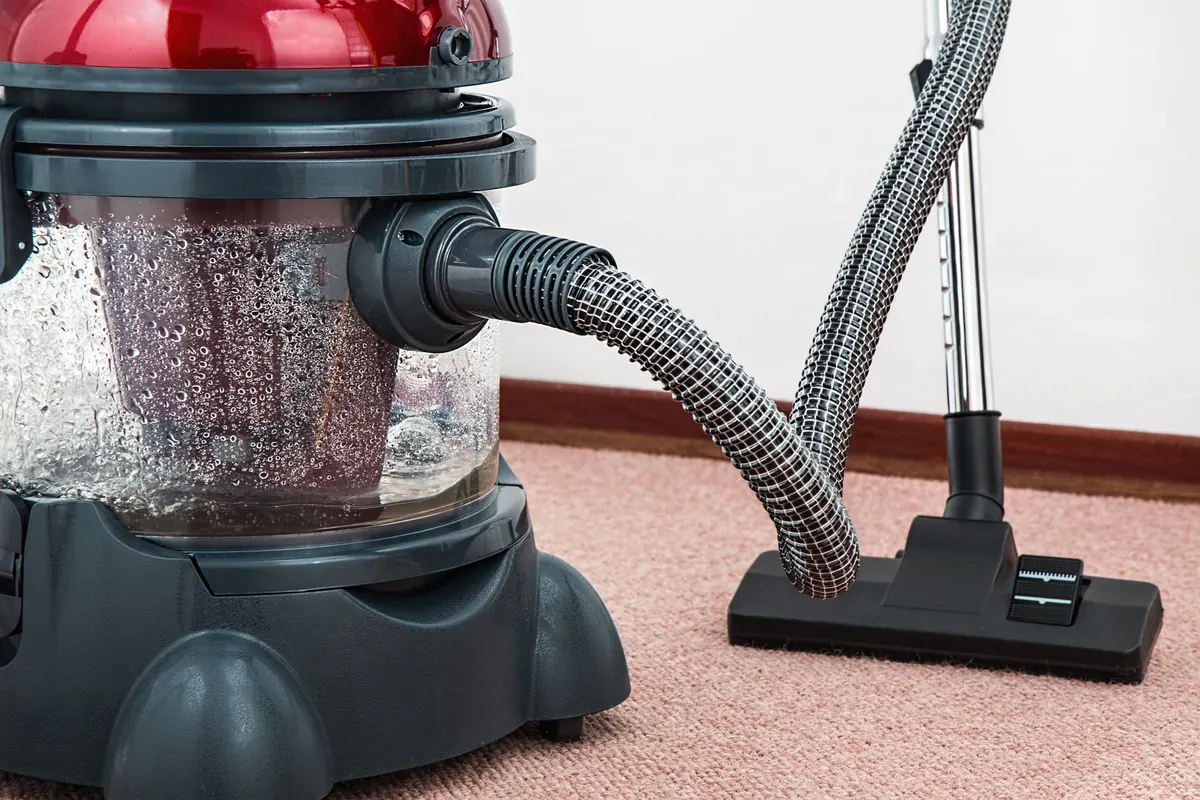
Move what furniture you reasonably can, then vacuum in two directions across each area rather than one quick pass. Sprinkle bicarbonate of soda over the carpet, leave it for twenty minutes, then vacuum it up. It lifts stale smells cheaply.
If you hire a carpet cleaner, test a hidden patch first, especially on wool. Over-wetting is the usual mistake: the carpet stays damp for days and starts to smell. Two light passes dry faster than one soaking.
Rugs are easier outdoors on a dry, breezy day. Beat them over a fence, leave them to air, then vacuum both sides before bringing them back in. On hard floors, sweep and mop with a mild solution, wringing the mop nearly dry for laminate and sealed wood — standing water is what damages them. Finish with the skirting boards: vacuum crevice tool first, then a damp cloth, then a dry one.
Do the kitchen one cupboard at a time. Empty it, wipe the shelves and the inside of the door, and put back only what you use. This is the one room where you're sorting as much as scrubbing, so work in this order: top cupboards, worktops, lower cupboards, floor.
Pull the fridge and the washing machine out if you can. The dust and debris behind them is the sort of thing that never gets cleaned otherwise.
Hard water leaves its mark on taps, shower heads and glass, and spring is the moment to deal with it properly.
Soak a cloth in white vinegar, wrap it around the fittings, and leave it for half an hour before rinsing. Don't use acidic cleaners on natural stone, marble or travertine, because the acid etches the surface; use a cleaner made for stone instead.
Grout responds well to a paste of bicarbonate of soda and water, worked in with an old toothbrush and rinsed. Black spots that come back within weeks usually mean moisture is trapped behind the sealant. Replacing it is a better fix than cleaning it again.
Wash the shower curtain, bath mats and towels, vacuum the extractor fan cover, and run hot water down the drains. Never mix bleach with other cleaners, particularly anything containing ammonia or acid, because the fumes can be harmful. If damp or mould keeps returning, it's worth getting advice: ventilation problems need a proper fix rather than another bottle of spray.
Strip the beds and vacuum the mattress on both sides before rotating it. A dusting of bicarbonate of soda, left for twenty minutes and vacuumed off, freshens it. Most duvets and pillows can be washed if the care label allows, so give them a long spin so they dry evenly.
Then work around each room in a circle, top to bottom:
Decluttering belongs here too. A box for charity, a bag for the bin and a basket for things that live in other rooms will do more for how the house feels than any amount of polishing.
Save the outside for a dry, mild day and start at the top.
Clear leaves from gutters and downpipes where you can reach them safely. Blocked gutters cause damp patches on walls, so it's worth doing before the next heavy rain. If yours are high or awkward, hand the job over rather than balance on a ladder.
Patio slabs come up well with a stiff brush and soapy water. A pressure washer shifts moss quickly, but keep it away from old mortar, pointing and soft stone. Clean decking along the grain with a dedicated cleaner and a brush rather than blasting it at close range.
Then wash the garden furniture, parasol, barbecue and bins, and let everything dry in the sun. Finish at the front door: wipe the door, letterbox, handle and house numbers, and sweep the step. It's a small job that sets the tone for the whole house.
Spring cleaning fails when it's treated as one enormous task. Break it down and it stops being daunting.
Some jobs need equipment most homes don't have: carpet extraction, oven cleaning, high windows, gutter clearance. If you'd rather not hire or climb, booking a professional for those specific tasks is a sensible spend, and you can get on with the quick, satisfying parts. Clean glass and a house that smells of fresh air are a good way to start the season.
Photo: ds_30 / Pixabay